
Materiality

Sanyo responds to the demands of the fashion industry for addressing social issues and stakeholders' expectations.
We have identified materiality among a wide range of issues, including climate change and resource recycling.
In addition, we will monitor progress by setting concrete action plans and KPI (quantitative targets).
Four Material Issues

Contribution to a sustainable global environment
We will work to combat climate change
by reducing greenhouse gas emissions from our business activities
See details

Efforts toward a circular economy
We will contribute to the realization of a circulating society
by manufacturing high-quality products that support long-term wear
See details
Further promotion of CSR procurement
Through partnerships, we will work to address human rights and
eliminate disparities and discrimination throughout the supply chain

See details

Promotion of human capital management
We will maximize individual capabilities and create synergies by maximizing individual capabilities and integrating diverse knowledge and experience to improve our overall strengths
See details
Identification of Materiality
In identifying materiality, we first listed a wide range of issues, reflecting international guidelines and requests from stakeholders.
We then assessed ESG issues identified through a survey of our managers from two perspectives:
the level of importance to stakeholders and the level of importance to the business.
The Sustainability Committee verifies the validity of the evaluation process and the evaluation results for these materialities,
The Executive Committee has identified important environmental and social issues that need to be addressed as a priority.
Materiality is reviewed annually by the Sustainability Committee, and approved by the Board of Directors.
Process for identifying materiality
Step 1

Identifying ESG issues
Referring to international frameworks such as GRI Standards, SASB Standards, ISO26000, and the 10 Principles of the United Nations Global Compact, we identify issues that are highly relevant to us from a wide range of ESG issues.
Step 2

Prioritizing Issues from Stakeholder Perspective
Based on the examples of our sustainability activities and benchmark companies, we selected priority issues at the Sustainability Committee based on a survey of 119 managers and the results of dialogues at SR meetings.
Step 3

Identification of Materiality by Management
Identifying material materiality related to our business at the Executive Committee
Step 4

Activity planning and KPI setting
Set specific sustainability promotion activities and KPI as medium-term targets in line with the identified materiality
Risk/Opportunity and Impact Related to Materiality
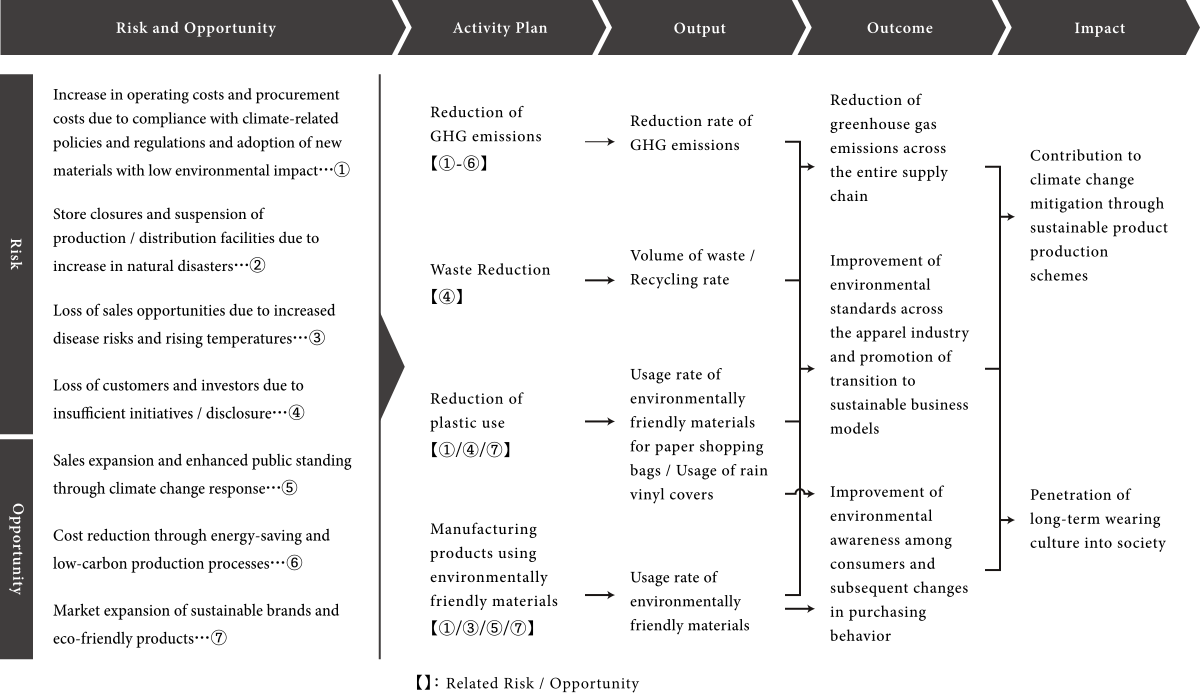
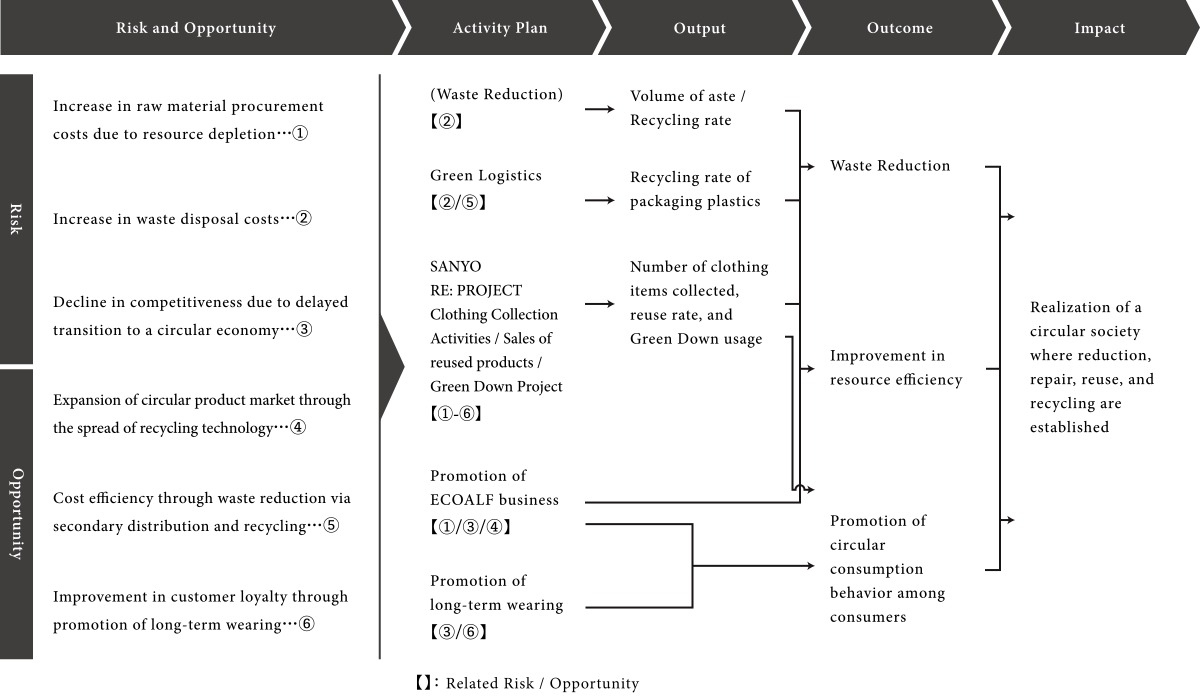
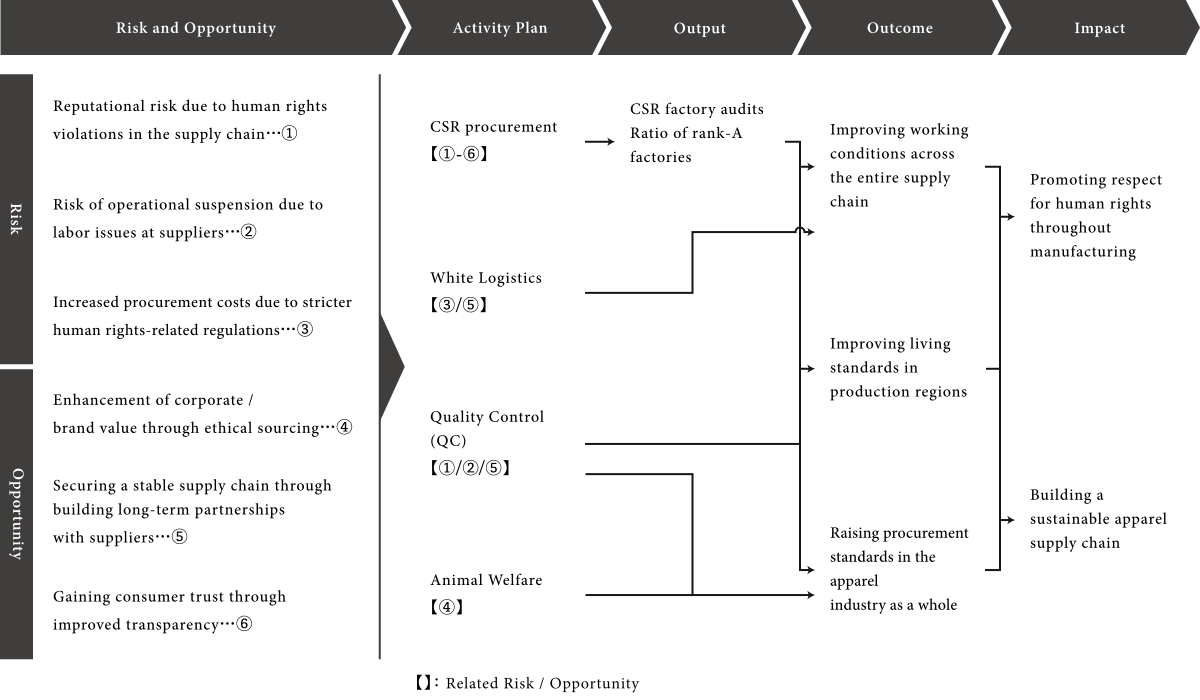
Sanyo identifies risks and opportunities related to the four material issues, strives to reduce risks, and aims to contribute to a sustainable society and achieve long-term corporate growth through the creation of new business models that solve environmental and social issues.
In addition, we identify the "impact"-the changes and effects our company has on society-by organizing each materiality according to the following process.

- Contribution to a sustainable global environment
- Efforts toward a circular economy
- Further promotion of CSR procurement
- Promotion of human capital management
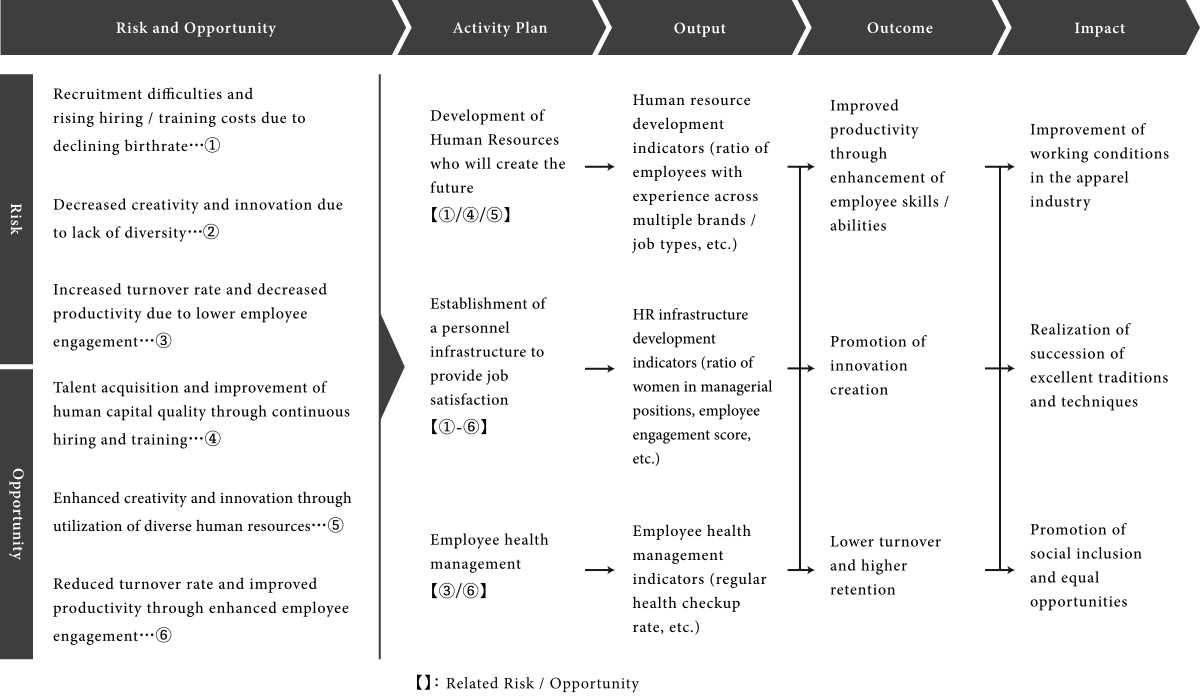
Activity Planning and KPI
We discussed the ideal state of our company in 2030, and reviewed the sustainability activities
we have been conducting so far in response to the four materialities identified in our medium-term vision.
We will reestablish a KPI that will enable us to confirm the progress of our initiatives for materiality and monitor our performance.
The Sustainability Committee verifies and checks the results and discloses them on the corporate website.
Contribution to a sustainable global environment
| Activity Plan | KPIs | Actual progress | ||
|---|---|---|---|---|
| FY2023 | FY2024 | FY2025 | ||
| Reduction of GHG emissions |
Scopes 1 & 2: 52% reduction Scopes 1 & 2: Net zero (FY2050) |
29%reduction | 38%reduction | 55.8%reduction |
|
Scope 3 (Category1・3・4・12): 30% reduction(Compared to FY2019) |
32%reduction | 30%reduction | 31.5%reduction | |
| Reduction of plastic use |
Switch to 100% use ofenvironmental friendly materials in paper shopping bags (FY2030) |
96.8% | 95.0% | 99.7% |
|
Eliminate all plastic rain covers |
639kg | 733kg | 0kg | |
| Manufacturing products using environmentally friendly materials | Usage rate of environmental friendly materials in total production volume: 30% (FY2030) |
19.4% | 23.3% | 25.3% |
Efforts toward a circular economy
| Activity Plan | KPIs | Actual progress | ||
|---|---|---|---|---|
| FY2023 | FY2024 | FY2025 | ||
| Clothing Collection Activities | Recovery ratio of target products relative to the previous fiscal year's production volume: 10% (FY2031) (FY2030) |
- | 2.4% | 3.6% |
| Green logistics |
Material recycling rate of plastic packaging for hanger covers and cut-and-sew knitwears: 50% (FY2030) |
11.5% | 11.9% | 22.2% |
Further promotion of CSR procurement
| Activity Plan | KPIs | Actual progress | ||
|---|---|---|---|---|
| FY2023 | FY2024 | FY2025 | ||
| CSR procurement |
CSR factory audits Ratio of rank-A factories: At least 90% (FY2030) |
84.9% | 86.7% | 87.0% |
Promotion of human capital management
| Activity Plan | KPIs | Actual progress | ||
|---|---|---|---|---|
| FY2023 | FY2024 | FY2025 | ||
| Development of Human Resources who will create the future | Ratio of new graduate general-track employees reaching the age of 30 and working in two or more job titles and two or more brands: 100% (FY2027) |
66.7% | 100% | 75.0% |
| Ratio of new graduate general-track employees reaching the age of 40 and working in three or more job titles and two or more brands: 100% (FY2027) |
100% | 100% | 100% | |
| Number of new graduate career-track employees aged 35 or younger with back-office department arrangement: 5 or more (FY2027) |
2 employee | 1 employee | 2 employee | |
| IT training participation rate: 100% (FY2027) |
Training not implemented | 100% | 100% | |
| Establishment of a personnel infrastructure to provide job satisfaction |
Ratio of women in manageria positions: 20% (FY2026) |
9.4% | 9.3% | 14.9% |
|
Gender wage gap: 72%
(FY2026 / ratio of women when men=1 /all job types*2)
|
68.9% | 69.9% | 72.2% | |
| Ratio of men taking childcare leave: 100% (FY2026) |
Men: 25.0% (Women: 100%) |
Men: 100% (Women: 100%) |
Men: 100% (Women: 100%) |
|
| Foreign employment rate: 3% (FY2027) |
0.96% | 1.05% | 0.97% | |
| Employee engagement score: 55.0 (FY2027) |
50.8 | 51.9 | 48.1 | |
| Number of employees in their 20s and 30s (total of new graduate hires and mid-career hires) : 20 people/year (FY2027) |
17 people | 53 people | 38 people | |
| 3-year retention rate for new graduates: 85% or higher (FY2027) |
80.0% | No target audience | No target audience | |
| Employee health management | Regular health checkup rate: 100% (FY2026) |
94.0% | 98.1% | 99.4% |
|
Stress check participation rate: 100% (FY2026) |
92.7% | 98.5% | 99.1% | |